Palynological Analysis
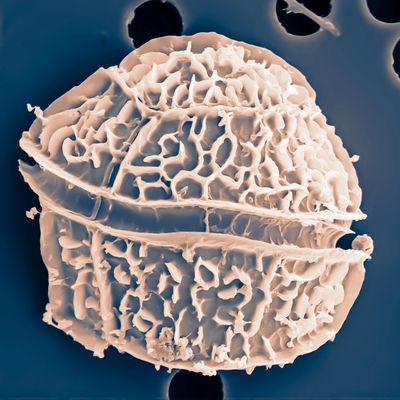
What is palynology?
The study of palynology involves the analysis of a varied group of organic walled microfossils including pollen, spores, dinoflagellates, acritarchs, chitinozoa and scolecodonts. Evolutionary trends exhibited by these microfossils through time enables age determinations to be made based on the assemblages present.
Why use palynology?
Palynomorphs are present in a wide range of environmental conditions spanning both terrestrial and marine environments. Their robust composition means that they are readily preserved within the fossil record when palaeoenvironmental conditions are favourable. Their small size means that large numbers of palynomorphs can be extracted from a relatively small sample of rock, including from ditch cuttings. The data collected from palynological analysis can assist in both regional and basin wide correlations, which is particularly useful for the oil and gas industry. Collectively, palynomorphs exhibit an extremely large age range, with some of the earliest forms of life preserved in the fossil record belonging to this group.
Why use Dawson Stratigraphic Services?
Dawson Stratigraphic Services has extensive experience analysing palynological assemblages across onshore Australia, with specific focus on the Cooper, Eromanga, Surat, Bowen and McArthur Basins. The strong foundation for this experience was built by working in a team with 40+ years of biostratigraphic expertise in the Cooper Basin, with many pioneering biozones for this region generated in-house. Our personal experience includes generation of biozonation and chronostratigraphic schemes to differentiate coal seams in the Bowen Basin and analysing and describing frontier biostratigraphic assemblages in the McArthur Basin.